This post may contain affiliate links. All opinions shared are my own. As an Amazon Associate, I earn from qualifying purchases. Click to view our full disclosure.
When was the last time members of your team truly enjoyed themselves at work? Building solid relationships at work shouldn’t be difficult.
However, many teams can only communicate through email and meetings. At first, I felt that indoor team-building activities were awkward or forced.
Then I tried a handful, and all of a sudden, instead of coworkers stuck in shared Wi-Fi, people were talking, laughing, and behaving like a real team.
These 15 indoor team-building activities are perfect if you want to boost your team without going outside or discouraging anyone.
Indoor Team Building Activities
1. The Marshmallow Challenge
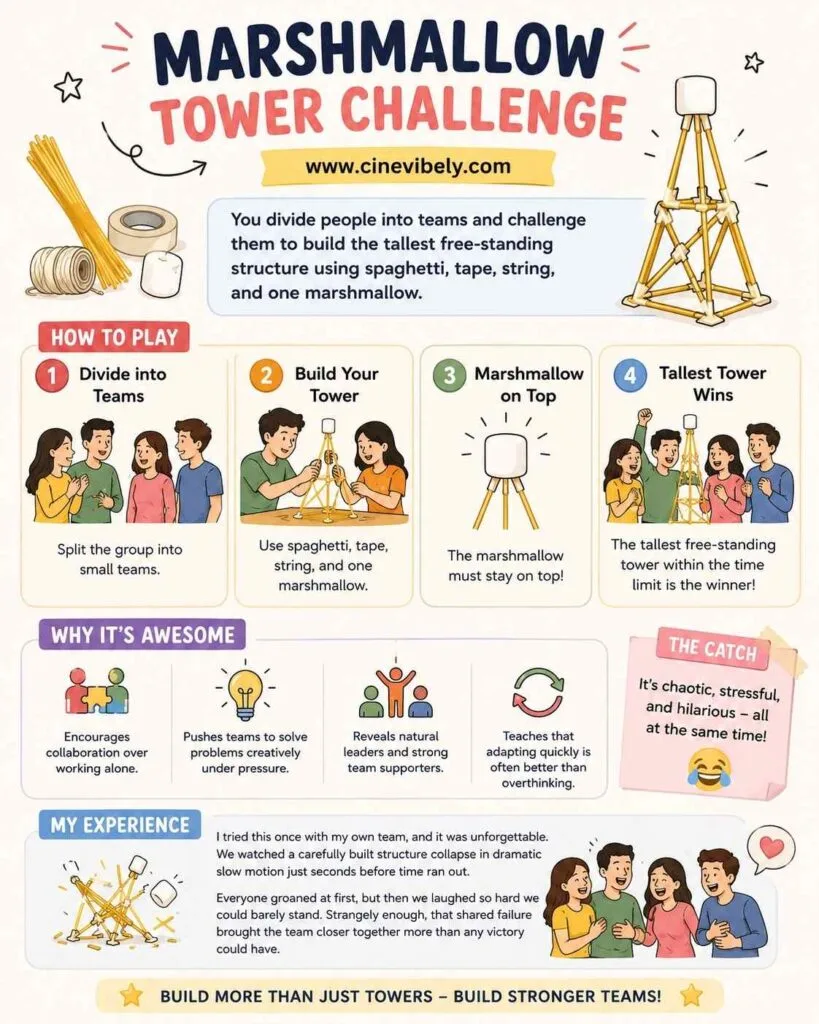
You divide people into teams and challenge them to build the tallest free-standing structure using spaghetti, tape, string, and one marshmallow.
The catch is that the marshmallow must stay on top. The game quickly becomes chaotic, stressful, and hilarious at the same time.
This activity helps people collaborate rather than working alone, as they normally do. It pushes teams to solve problems creatively under pressure, reveals who naturally takes the lead and who supports the group, and teaches everyone that adapting quickly is often better than overthinking every step.
I tried this once with my own team, and it was unforgettable. We watched a carefully built structure collapse in dramatic slow motion just seconds before time ran out.
Everyone groaned at first, but then we laughed so hard we could barely stand. Strangely enough, that shared failure brought the team closer together more than any victory could have.
2. Paper Tower Competition
In the Paper Tower Competition, each group gets a stack of paper and a timer. The challenge is simple: build the tallest tower possible without using tape or glue.
It quickly turns into a mix of creativity, chaos, and questionable physics. This game works so well because it forces teams to solve problems with limited resources.
It encourages real teamwork instead of letting one person take complete control, while the friendly competition keeps everyone motivated without creating tension. It also reveals who can think creatively under pressure and who starts to panic when time is running out.
One of the funniest parts is watching serious coworkers suddenly become intensely competitive.
The quiet person from accounting who barely says a word somehow turns into an expert engineer, folding paper into complicated shapes and giving rapid-fire instructions to the team. Seeing people passionately defend their shaky, wobbling towers never stops being entertaining.
3. Try Wheeled Team Relay
Form into a small team and start the race by moving a teammate across the office floor as quickly as possible while pushing and guiding them on a tiny wheeled cart. Within seconds, the office fills with shouting, laughter, and complete chaos.
The game works because it builds trust fast. The person riding the cart has to rely entirely on their teammates for balance, speed, and direction.
At the same time, the rest of the group must communicate clearly and coordinate every movement to avoid crashing or slowing down.
It is a high-energy activity that combines teamwork, strategy, and quick decision-making under pressure. Watching coworkers suddenly become competitive race crews, yelling instructions while trying not to lose control of the cart, makes the whole experience even more entertaining.
4. The Challenge of the Strategy Map
Everyone gathers around a shared table filled with colorful sticky notes and large diagrams. The team works together to organize complex ideas by grouping similar solutions and connecting different thoughts.
This activity works best when everyone shares their unique perspectives and ideas during the planning process. The shared workspace also encourages natural communication, including nonverbal cues, which helps the team collaborate smoothly and agree on the next steps more easily.
5. Play Balloon Keep Up
In this fun indoor team-building game, each team has a few balloons, and the goal is to keep them in the air longer than the other groups. It may look silly, but it quickly builds teamwork and fills the room with energy and laughter.
The game works because it requires quick coordination without giving people time to overthink or assign roles. Everyone has to stay alert, pay attention to their teammates, and react fast as balloons fly in different directions.
It also breaks down barriers because everyone ends up looking equally ridiculous while jumping, diving, and chasing balloons around the room.
One of the best parts is seeing unexpected people shine. The quiet coworker suddenly becomes the team’s MVP, and someone always discovers they have amazing reflexes.
Watching the entire team rush toward one balloon while another quietly drops behind them is also a funny reminder of how teamwork can sometimes go wrong in the workplace — just in a much more entertaining way.
6. The Collaborative Mural
Creative teams gather around a large blank canvas, ready to share their ideas and artistic styles. Everyone works together to combine colors, shapes, and designs into one unique abstract masterpiece.
This activity encourages teamwork by bringing different painting styles and creative perspectives together. People learn to share tools, respect each other’s ideas, and blend their individual contributions into one final piece of art.
In the end, the finished canvas becomes a lasting reminder of the group’s creativity and successful collaboration.
7. The Challenge Of Spire Building
In this challenge, everyone focuses on building the tallest free-standing structure using dry spaghetti and small sugary connectors. Teams must carefully use their limited materials while following the rules and keeping the structure stable.
This activity encourages quick thinking, testing, and problem-solving before the time runs out. Teams soon realize that a strong foundation is the key to supporting bigger goals. It is a fun way to teach teamwork, creativity, and the importance of planning under pressure.
8. The Indoor Scavenger Hunt
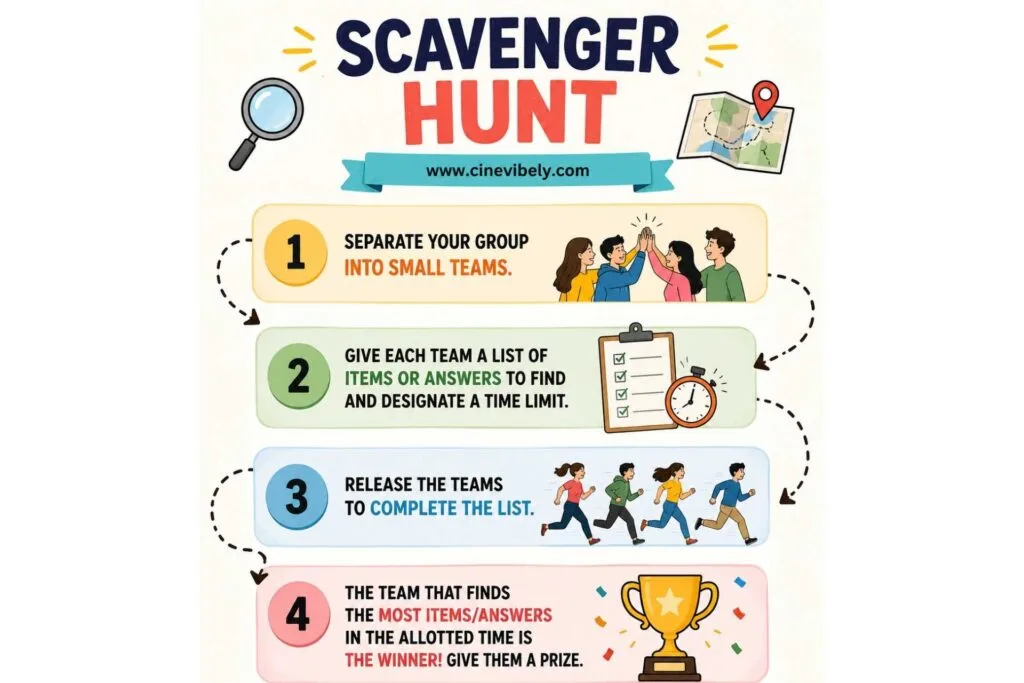
You create a list of hidden items or clues around the office, and teams race to find them before everyone else. It sounds simple, but the competitive energy quickly turns the workplace into a fun adventure zone.
To make the game more exciting, include clues that require real thinking instead of random searching. You can also add bonus challenges, like taking funny team photos in unusual places around the office.
A strict time limit keeps everyone moving fast and adds extra excitement. Mixing easy clues with harder ones that only longtime employees might recognize also makes the game more interesting.
One of the funniest parts is watching grown adults sprint through hallways searching for something as small as a stapler, like it is the most important mission ever.
People suddenly rediscover forgotten corners of the office, including storage rooms nobody normally enters. The scavenger hunt breaks the daily routine, gets everyone moving, and creates inside jokes that teams remember for months.
9. The Memory Tray Challenge
Arrange different objects on a tray, allow your team to observe for ten seconds, and then cover the tray. After that, each team writes down everything they can remember. It sounds simple, but the results are often surprisingly difficult and hilarious.
This game helps strengthen teams by improving attention to detail and showing people that observation skills are not always as strong as they think. It also highlights how different team members notice completely different things.
Some people remember tiny details, while others focus on larger objects. As teams combine their observations, they learn that working together is much more effective than relying on one person’s memory.
The game also creates fun competition without putting too much pressure on anyone. One person might remember a paperclip but completely forget the coffee mug, while another confidently insists there was a pen on the tray that was never there at all. The debates about what people actually saw often become the funniest part of the activity.
10. Try The Yes Game Challenge
In this fun team-building challenge, everyone must say “yes” to every idea suggested by their teammates during a short round. The goal is to keep the energy positive and encourage people to stay open-minded instead of quickly rejecting ideas like they often do in the workplace.
This activity helps teams become more supportive and creative. People learn to accept ideas without immediately criticizing them, which allows conversations to grow naturally.
It also improves quick thinking because participants must respond instantly instead of overanalyzing every suggestion. The game creates a relaxed, judgment-free environment where even the wildest ideas are welcomed.
One of the best parts is watching people step outside their habits. The coworker who normally says, “That will never work,” suddenly has to build on crazy ideas and keep the conversation going. As creativity replaces hesitation, the team naturally becomes more connected and comfortable with each other.
Also read,
19+ Hilarious Office Games To Try With Co-workers
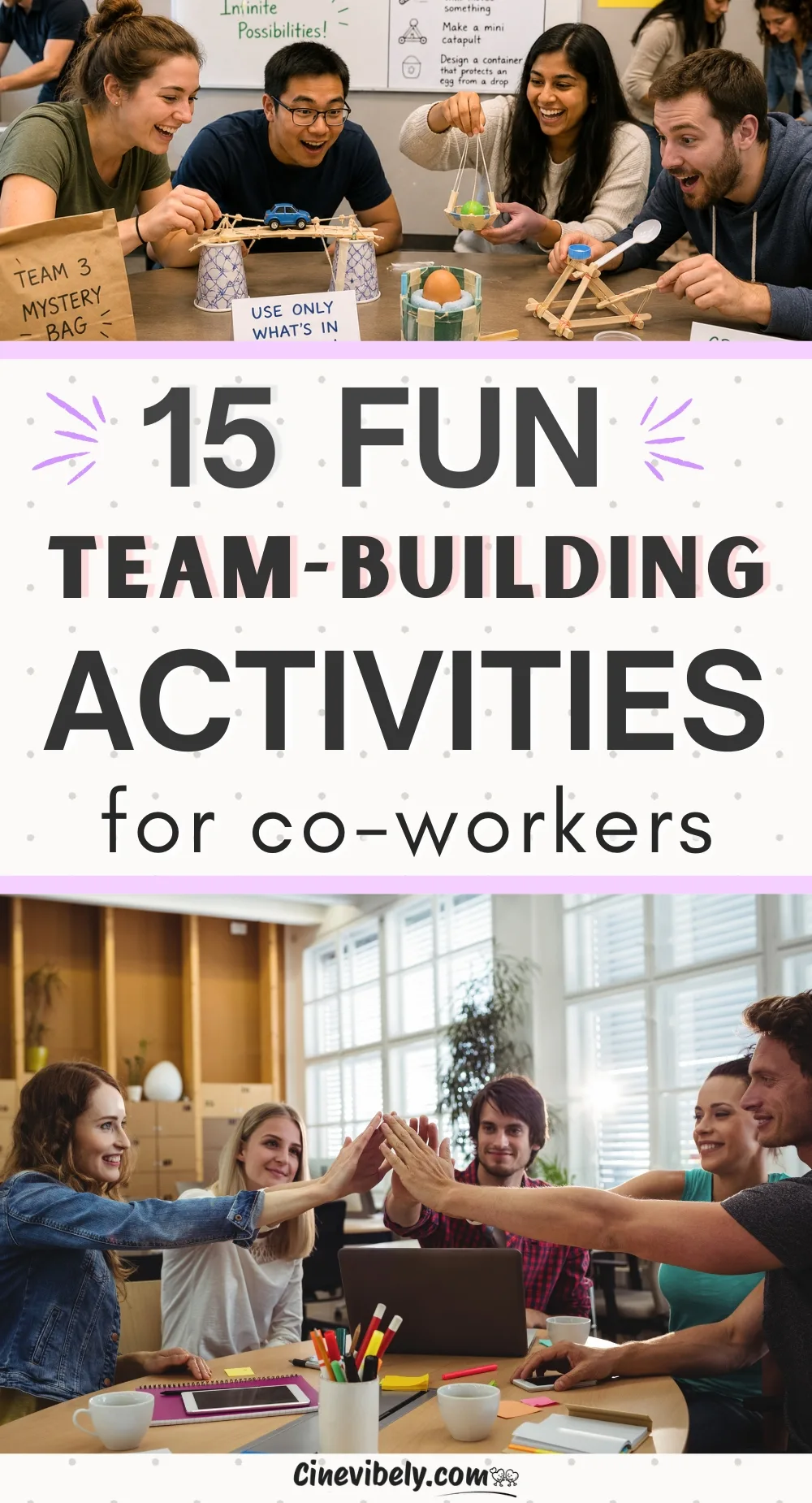
11. Problem-Solving Mystery Bags
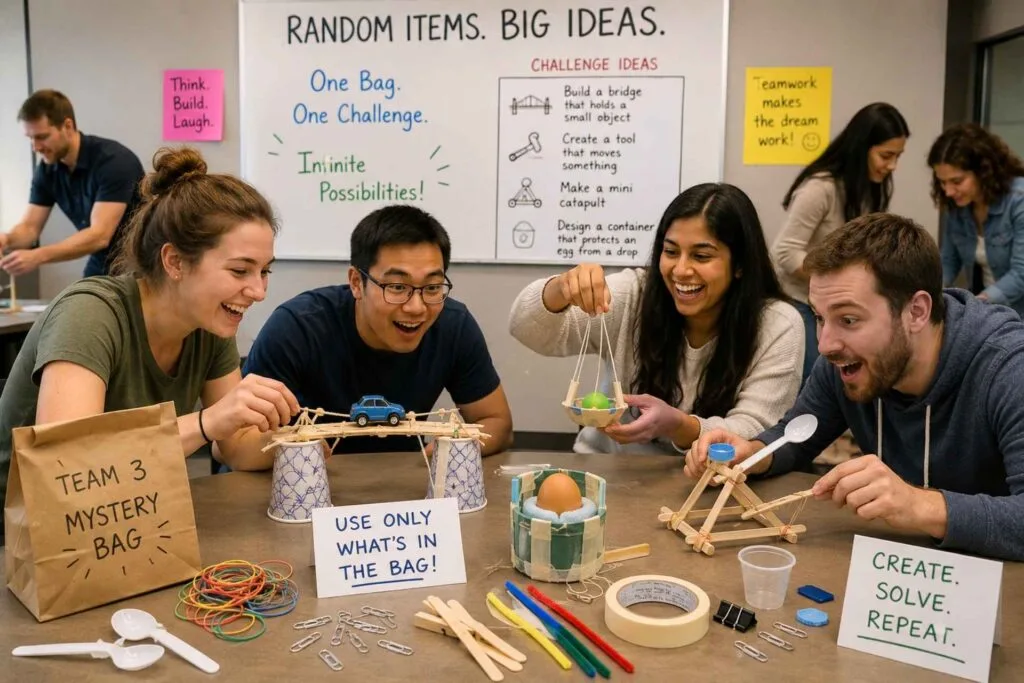
In this activity, fill bags with random items like spoons, string, tape, paperclips, and other everyday objects. Each team receives one bag and must complete a challenge using only the materials inside.
The challenges can include building a bridge that holds a small object, creating a tool to move something, making a mini catapult, or designing a container that can protect an egg from a short drop.
This activity encourages creative thinking, teamwork, and problem-solving under pressure. Teams must quickly figure out how to turn simple items into useful solutions.
It also reveals who can stay calm and think creatively when faced with unexpected challenges. Watching people build clever inventions from random junk often leads to both impressive ideas and plenty of laughter.
12. 3 Truths and a Lie
Team type: Remote and in-person
Duration: 15 to 20 minutes
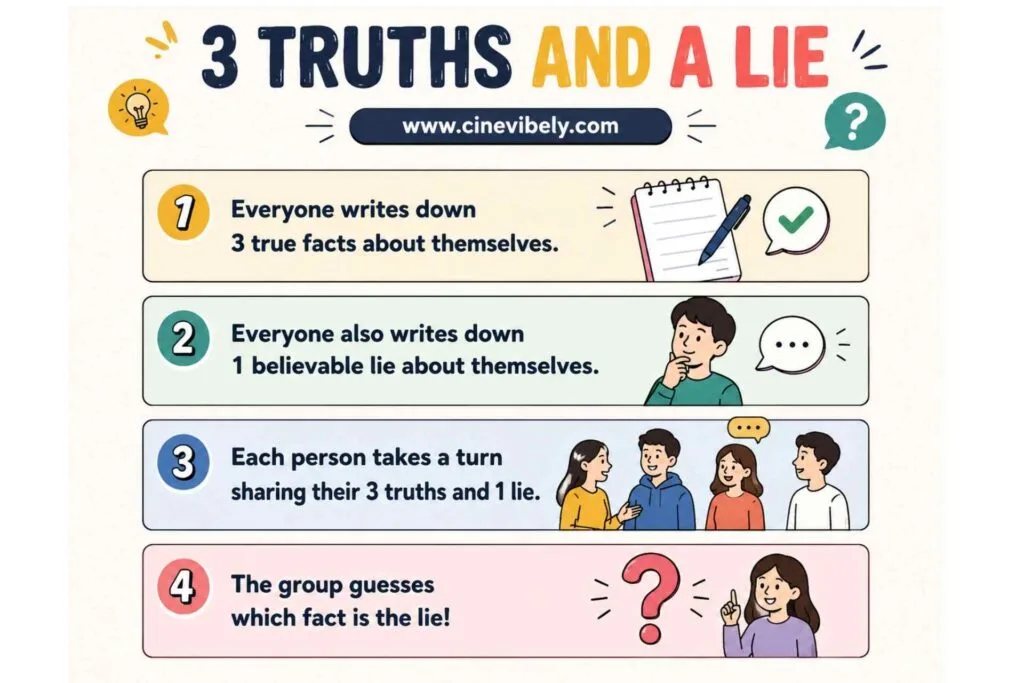
This classic icebreaker is a fun and simple way for team members to learn more about each other. Each person shares four personal statements — three true facts and one false statement. The rest of the group then tries to guess which statement is the lie.
The game helps people feel more comfortable with one another and encourages even the quieter team members to join the conversation.
It also creates plenty of laughs as participants share unexpected stories, interesting experiences, or believable lies that confuse the group.
How to play:
- One person shares four personal statements: three truths and one lie.
- The lie should sound believable, even though it is false.
- The group discusses the statements and guesses which one is the lie.
- The speaker reveals the correct answer.
- Continue until everyone has taken a turn.
To make the game more challenging, players can include unusual true stories that sound completely fake.
For remote teams, the activity works just as well over a video call by taking turns sharing and guessing together.
13. Big Foot Challenge
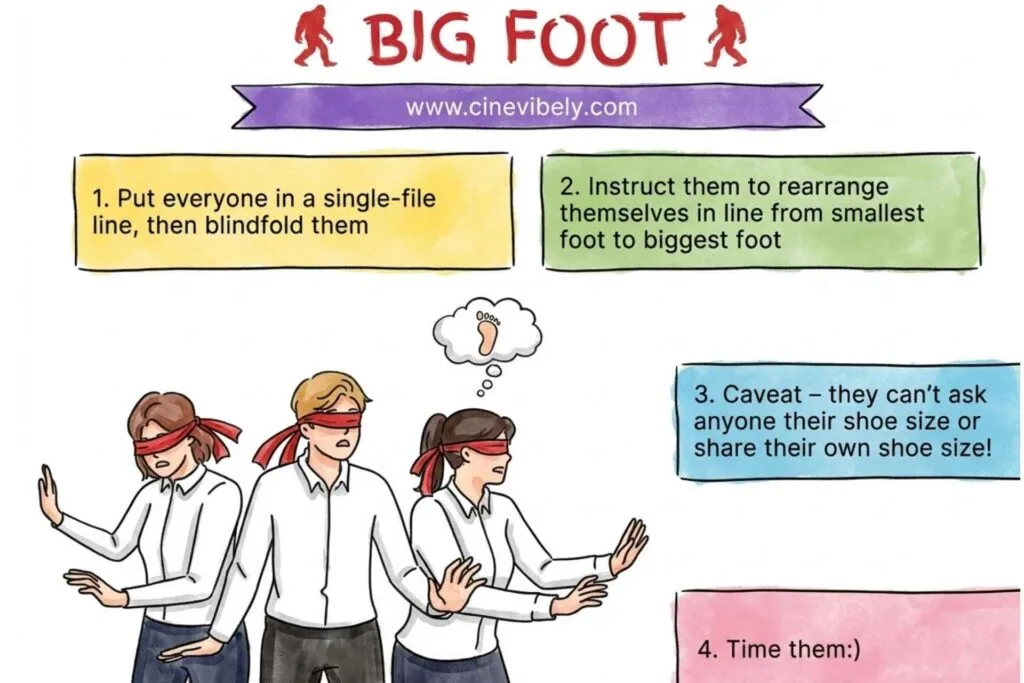
Team type: face-to-face
Duration: 10 to 20 minutes
Equipment: Blindfolds for each participant, and optional socks or novelty Big Foot Racing Feet
Everyone must stand in the same file line while wearing a blindfold for this exciting and challenging game. Without inquiring about or revealing anyone’s shoe size, the aim is for participants to arrange themselves in order from smallest to largest foot.
By instructing participants to rely on nonverbal clues and creative problem-solving, Big Foot is a great team-building exercise that improves communication and collaboration abilities. Wearing socks can help reduce the chance of minor bumps or kicks because players are blinded.
14. Try Zombie Escape
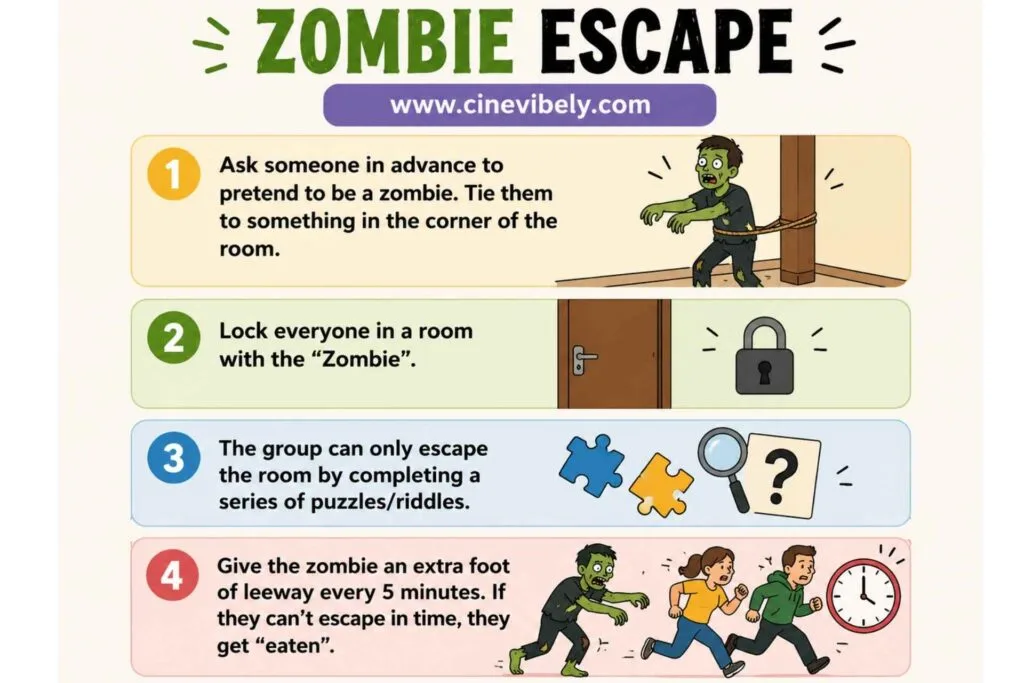
This is a face-to-face, 30 to 45-minute activity
Equipment: includes a rope, puzzle or riddle props, and a key or lock arrangement.
In this thrilling indoor team-building game with an escape room theme, players are “locked” in a room with a “zombie.” Tied to a rope in the corner, one person plays the zombie, packed with outstretched arms and spooky sounds.
The zombie gets an additional foot of freedom on the rope every five minutes, rapidly approaching the players to “catch” them.
Zombie Escape encourages teamwork, communication, and creative problem-solving under stress. Players must think quickly, share ideas, and stay calm while the pressure increases. The activity also reveals how different people react in stressful situations, showing who naturally becomes a leader and who performs well under pressure.
How to play:
- Choose one player to act as the zombie and limit their movement with a rope.
- Increase the zombie’s movement range every five minutes.
- Hide puzzles, riddles, and clues around the room for the team to solve.
- The team must work together to find the key before the zombie reaches them.
- If they solve everything in time, they escape. If not, the zombie catches them.
15. Do You See What I Mean?
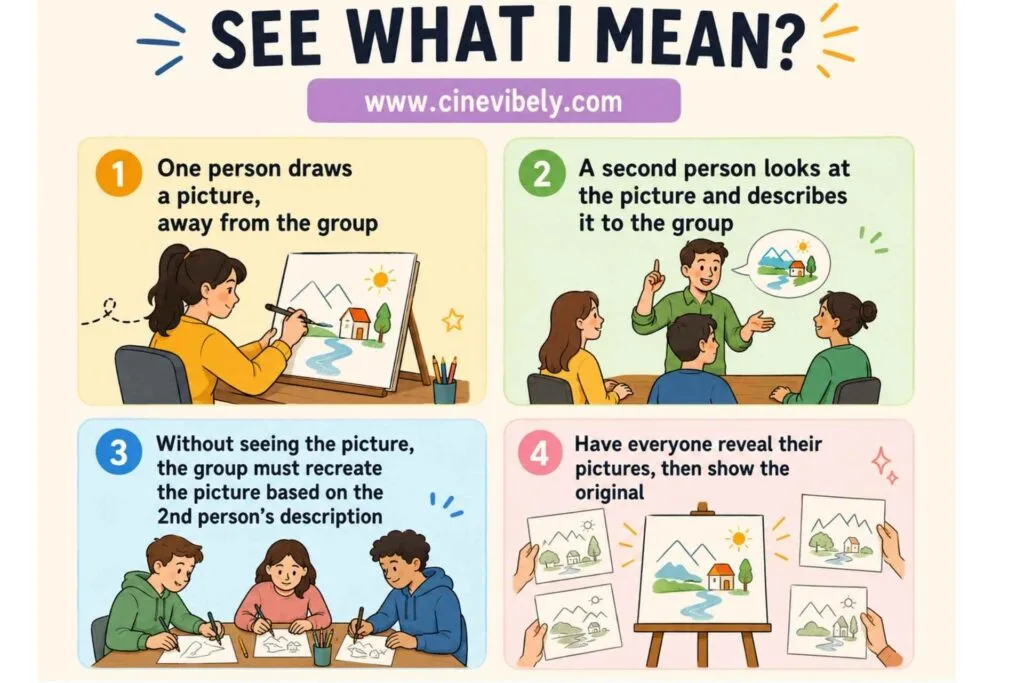
Team type: In-person
Duration: 15 to 25 minutes
Equipment: Paper and pen or a whiteboard with markers
See What I Mean? is a fun indoor team-building game that focuses on communication and listening skills. In this activity, one person creates a simple drawing using only basic shapes. A volunteer then looks at the picture and explains it to the rest of the group without showing the actual image. Based only on the description, the other participants try to recreate the drawing as accurately as possible.
The results are usually funny and surprisingly different from the original picture. That is what makes the game so valuable. It shows how people can understand the same instructions in completely different ways. Multiple rounds also help teams discover which communication styles are the clearest and easiest to follow.
This activity encourages teamwork, active listening, and better understanding between coworkers. It also helps people recognize how tone, wording, and personal interpretation can affect communication in everyday work situations.
How to play:
- One person draws a simple picture using basic shapes.
- A volunteer studies the drawing and describes it to the group without showing it.
- The rest of the participants recreate the image using only the verbal instructions.
- Compare everyone’s drawings to the original picture.
- Play several rounds to observe different communication and listening styles.
Save this pin for later
Also read,
19+ Hilarious Office Games & Bets To Beat The Boredom
Final Thoughts
Indoor team building activities are more than just fun office games. They help coworkers connect, communicate better, and build stronger relationships in a relaxed and enjoyable environment. Whether it is solving puzzles, competing in creative challenges, or simply laughing together during a silly activity, these moments encourage teamwork and trust in a natural way.
The best part is that people often leave with stronger bonds, a better understanding of each other, and memories that continue long after the activity ends. A simple team-building game can bring fresh energy to the workplace and remind everyone how important collaboration and communication truly are.